
30 Fifth Ave – Building History
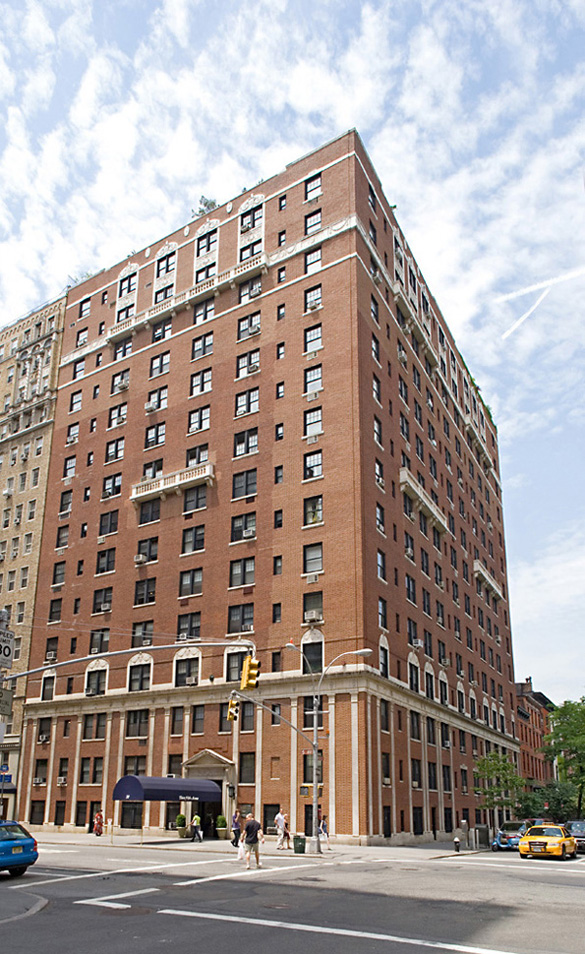
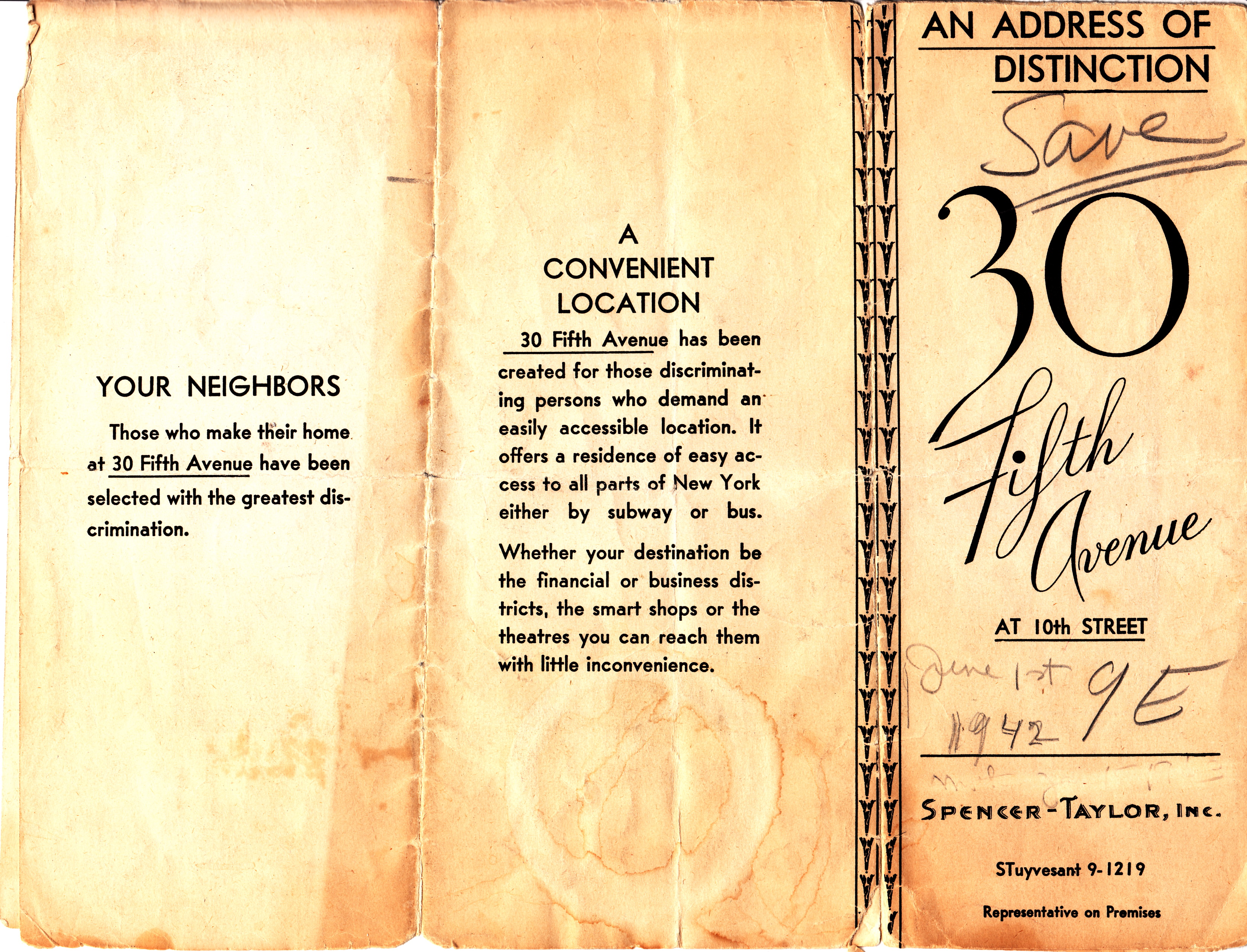
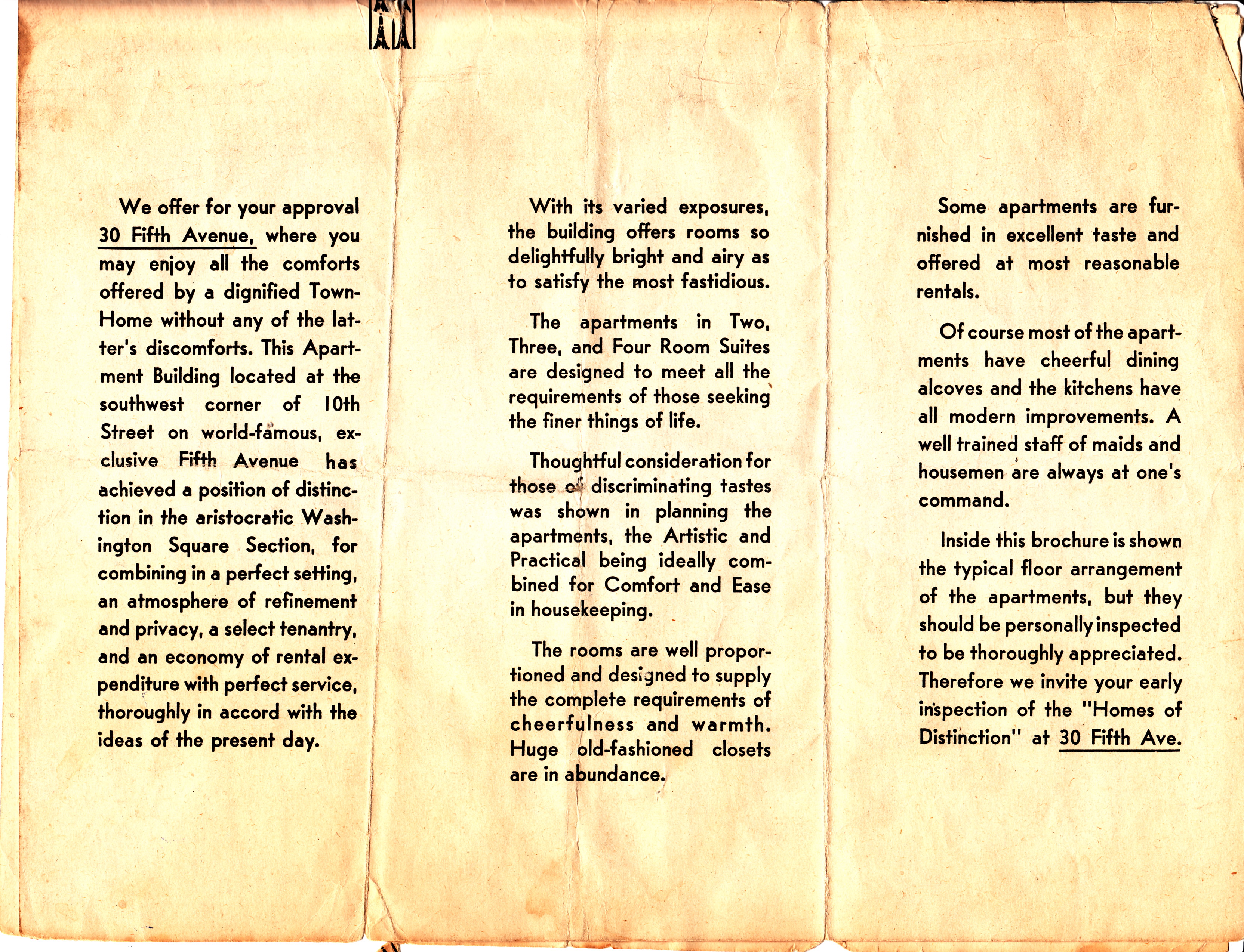
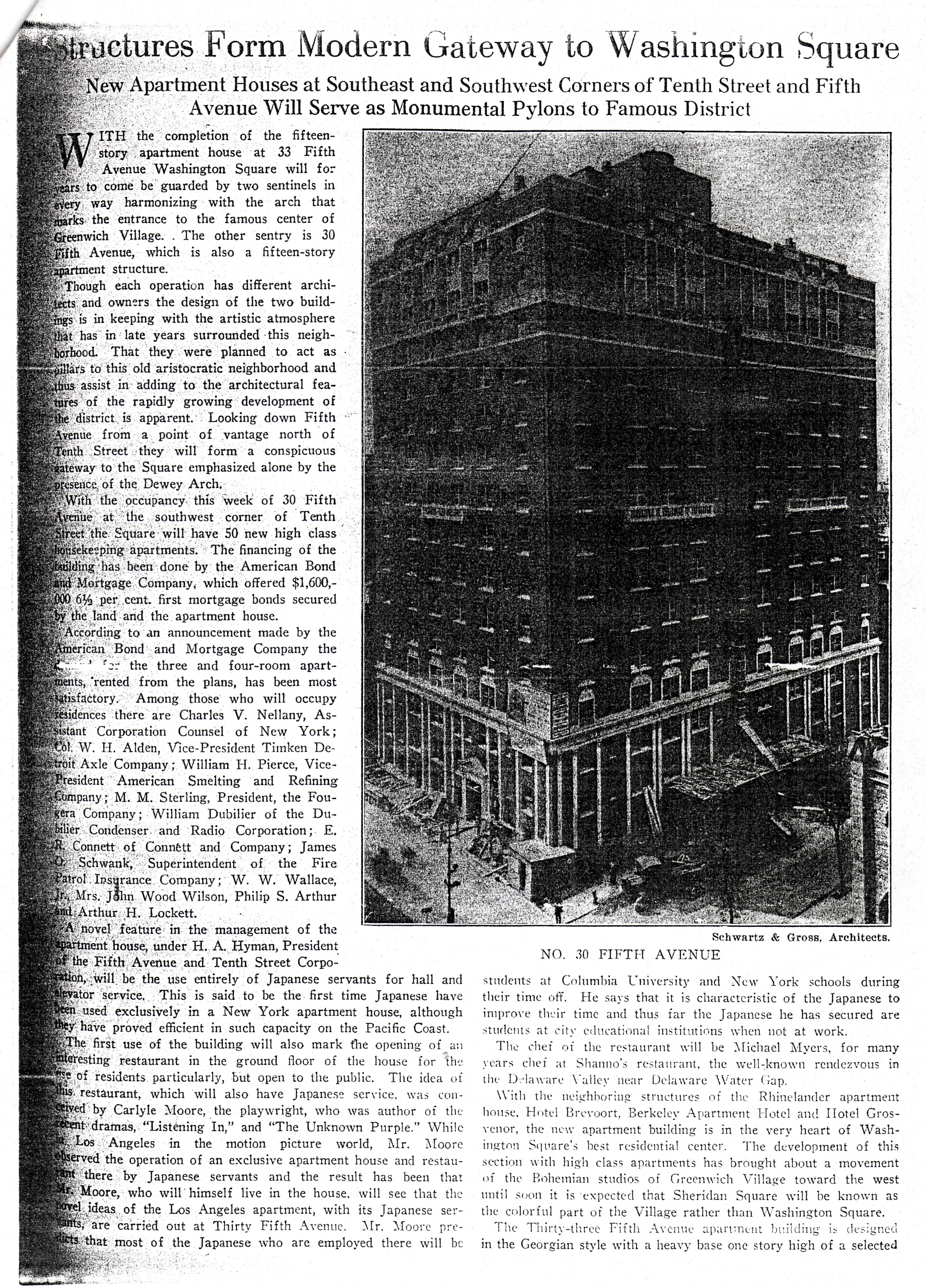
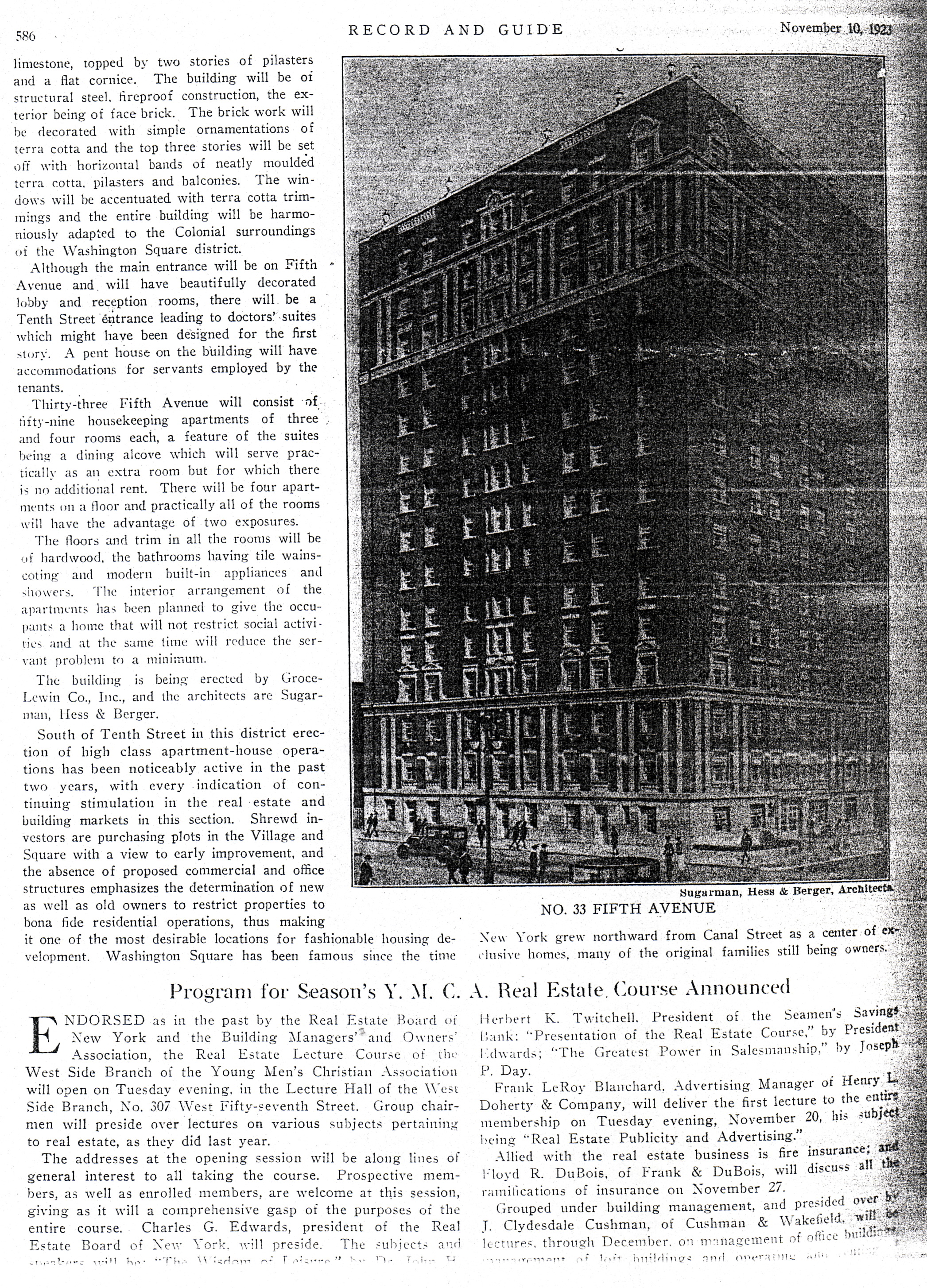
On June 10, 1923, an advertisement appeared in the New York Times for a new apartment-hotel at 30 Fifth Avenue, “where aristocracy reigned supreme.” Located in the historical and ultra-convenient “Washington Square section,” the sixteen-story building that was currently under construction had been designed “on strict accord with the ideals that appeal to people of discrimination” in order to provide “every comfort imaginable.”
First and foremost, the ultra-modern building was of course “fireproof.” The suites were “spacious and airy” and “glorious sunshine” filled them all. A “great many of the suites” had “cheerful dining alcoves,” while “maid, valet, and porter service” was “instantly available.” But perhaps the greatest convenience the apartment-hotel offered was located on the ground floor. There, the “fully equipped restaurant” fulfilled “every desire” and allowed “unexpected guests” to be served “expeditiously and graciously.” Last, but certainly not least, a “modern and complete laundry and dryer” – “an unusual housekeeping convenience” – was available in the basement.
Overall, the Apartment Hotel at 30 Fifth Ave , certainly offered the best of both worlds – the convenience of apartment living combined with the luxurious amenities of a hotel – which certainly made demand for the residences very high. Original annual rents ranged from $1,400 to $3,800 – top-of-the-market rates in 1923.
The fact that 30 Fifth Avenue was designed by the pre-eminent New York architectural firm of Schwartz & Gross only added to its already substantial desirability. Simon I. Schwartz and Arthur Gross both attended the Hebrew Technical Institute and formed their lucrative partnership in 1902 shortly after their graduation. Schwartz & Gross specialized in apartment and hotel design from the very beginning. Active throughout the first three decades of the twentieth century, their style varied as the years progressed, ranging from the revivalist styles popular during the pre-World War I years to the neo-Federal and neo-Gothic styles of the 1920’s.
30 Fifth Avenue reflects the neo-Federal style; designed to resemble the buildings popular in the United States in the early 1800’s, the building harmonized well with its historical surroundings of ‘Washington Square and Greenwich Village. The neo-Gothic structure at 1070 ParkAvenue (1928) is also an excellent example of the firm’s later period of production. Conversely, 375 West End Avenue, designed in 1913 in the neo-Renaissance style to resemble the elegant and luxurious palazzos of sixteenth-century Rome, reflects the firm’s earlier period. Schwartz & Gross even moved towards the Art Deco; an Art Deco example from 1928-1929 can be found at 336 Central Park West. This ability to confidently manipulate so many different styles only added to the firm’s success and prestige, making the architects indispensable to the developers building apartment homes for the elite throughout Manhattan.
When 30 Fifth Avenue opened the doors to its first residents in October of 1923, the apartments in the building, with their many modern features and amenities, were some of the most sought-after of that year’s rental season. The same remains true today, proving that 30 Fifth Avenue was, and still is, a truly desirable address!
30 Fifth Avenue History Courtesy of Deanna E. Kory – The Corcoran Group
DEANNA E. KORY the corcoran group real estate – 660 MadisonAvenue, NewYork, NY 10065
(212) 937.7011 e-mail:DEK@corcoran.com. Owned and Operated by NRT Incorporated. The Corcoran Group is a licensed real estate broker’
Photo Courtesy Ellen Rick
